Finding the best ratcheting hand pruner for weak hands that suits you depends on how much branch thickness you need to handle and how your hands feel during long garden sessions. These tools differ mainly in their maximum cut capacity, the materials used for the blades, and the specific grip designs intended to reduce fatigue. If you have very small hands, you’ll look at a tool like the Tiger Jaw P1 Pruner, while those needing to clear thicker brush often prefer the robust build of the EZ Kut Ratcheting Pruner.
All 10 products side by side — scroll sideways to see every column.
| Best Choice | ||||||||||
| Preview |  |  |  |  |  |  |  |  | 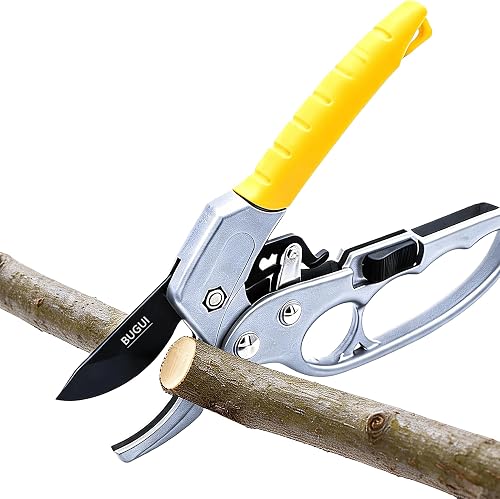 |  |
|---|---|---|---|---|---|---|---|---|---|---|
| Product | The Gardener's Friend Ratchet | Corona Ratchet Pruner | EZ Kut Ratcheting Pruner | Ironwood Tool Ratchet | Tiger Jaw P1 Pruner | Garden Guru Ratchet | gonicc Ratchet Anvil | Flora Guard Ratchet | Bugui Ratchet Pruner | Gerossi Ratchet Pruner |
| Brand | The Gardener's Friend | Corona Clipper | EZ Kut | Ironwood Tool Company | Tiger Jaw | Garden Guru Lawn & Garden Tools | gonicc | FLORA GUARD | BUGUI | GEROSSI |
| Best for | Best Overall | Most Reliable Mechanism | Best Heavy Duty | Best for Arthritis | Best for Small Hands | Most Ergonomic Grip | Best Anvil Design | Best Versatility | Simplest to Use | Best Compact Build |
| The listing says | Ratchet mechanism for increased cutting power Neoprene anvil insert and safety latch | Ratchet mechanism reduces hand effort 3/4-inch cut capacity | Cuts branches up to 1.5 inches Ratcheting mechanism with shock-absorbing pads | Non-stick carbon steel blade Hand guard for mobility | Nylon and fiberglass handle with lock Ratchet anvil cuts up to 1/2 inch | Dual mode anvil pruner with safety lock High carbon steel blade with nonstick coating | SK-5 steel blades Chrome vanadium steel handles | Cuts branches up to 7/8 inch 3-step ratcheting mechanism | 3-step ratchet mechanism reduces effort Designed for limited hand strength | Single-cut and 3-step ratchet modes Ratchet mode multiplies hand power threefold |
| More information | Check Price on Amazon | Check Price on Amazon | Check Price on Amazon | Check Price on Amazon | Check Price on Amazon | Check Price on Amazon | Check Price on Amazon | Check Price on Amazon | Check Price on Amazon | Check Price on Amazon |
1. The Gardener’s Friend Heavy Duty Ratchet Pruning Shears
Best for: Someone who wants a reliable, all-purpose pruner for daily garden maintenance.
This tool is built for those who need extra leverage to tackle stems and small branches. The anvil design includes a neoprene insert that helps hold branches steady, which prevents them from slipping while you apply pressure in stages.
The manganese steel blade and aluminum body are designed to resist corrosion, making this a solid choice for gardeners working in damp conditions. Because it uses a ratchet system, you don’t need a single powerful squeeze to finish a cut, which helps if your grip strength varies throughout the day.
If you encounter a branch that feels stubborn, don’t force the tool in one motion. Instead, use the ratchet mechanism to cut in stages, allowing the blade to reset without losing your grip. This prevents the blade from binding and ensures the cut remains clean.
It’s less suitable for users who need to cut branches thicker than 1 inch. While the tool is resilient, attempting to exceed this diameter can strain the mechanism. Assess the wood density before starting; softer green wood is easier to manage than seasoned, hardened branches of the same size.
Good if: * You want a tool with a secure, non-slip grip. * You need a safety latch to prevent accidents. * You prefer a lightweight yet resilient construction.
Skip it if: * You have large branches exceeding 1 inch. * You require a bypass-style cutting action.
2. Corona Tools Ratchet Hand Pruner
Best for: Gardeners who prioritize a well-known, simple mechanism for routine trimming.
The Corona Ratchet Pruner focuses on a 3/4-inch cut capacity, making it a dependable option for general yard work. Its ratchet mechanism is designed to cut in stages, which is helpful when you’re pruning shrubs or overgrown plants that require multiple squeezes. By breaking the cut into smaller segments, the tool multiplies your force, allowing you to slice through woody stems with significantly less hand fatigue.
The steel blade provides a clean cut, which is vital for keeping your plants healthy after trimming. The handles are ergonomic and cushioned, aimed at reducing strain during long sessions of shaping bushes or trees. If you feel the blade struggling or the branch resisting, stop immediately. Attempting to force material larger than 3/4-inch will damage the internal ratchet gears and dull the steel edge. This tool isn’t intended for heavy-duty limb removal, as its capacity is strictly limited to 3/4-inch growth.
Good if:
- You want a simple, reliable tool for shrubs.
- You need a secure, cushioned handle.
- You perform regular, light pruning tasks.
Skip it if:
- You need to cut branches thicker than 3/4 inch.
- You’re looking for a complex dual-mode system.
3. EZ Kut Heavy Duty Pruning Shears Green
Best for: Someone tackling thick, woody stems who needs professional-grade durability.
When you have to deal with branches up to 1.5 inches, this tool is designed to handle the load. It uses a hardened carbon steel blade with a non-stick coating, which prevents sap from gumming up the action during heavy use.
The full-metal, cast aluminum construction is built for longevity and provides a sturdy feel that many heavy-duty users prefer. Its shock-absorbing pads are specifically included to help manage wrist strain during tough jobs.
This pruner is less ideal for someone with very small hands, as the heavy-duty frame is sized for medium to large grips. If your hands are small, you may struggle to maintain the secure, ergonomic grip necessary to trigger the ratcheting action effectively.
Good if:
- You need to cut branches up to 1.5 inches.
- You want a durable, full-metal tool.
- You prefer a non-stick blade coating.
Skip it if:
- You have very small hands.
- You only need to trim delicate flowers.
4. Ironwood Tool Company Ratchet Pruning Shears
This pruner is explicitly designed for those with weaker hand strength. It features a non-stick coating on a carbon steel blade, and its unique design includes a hand guard that helps you reach into tight, thorny areas safely.
The tool uses aluminum handles to keep the weight down, which is a major factor for anyone who tires quickly while gardening. By eliminating metal-to-metal contact, it reduces the friction that can make a tool feel “jerky” or difficult to operate.
If you struggle with hand fatigue, the ergonomic grip is the primary feature to prioritize. The tool excels when you’re working in dense shrubs or bushes where maneuverability is limited. However, don’t mistake this for a heavy-duty lopper.
You should choose this model if you suffer from arthritis or carpal tunnel syndrome, as the lightweight frame minimizes repetitive strain. If you’re clearing thick, mature tree limbs, this tool isn’t the correct choice. Stick to smaller, green growth to ensure the carbon steel blade remains sharp and effective over many seasons.
5. Tiger Jaw P1 Pruner
Best for: Gardeners with small hands who need a lightweight tool for flowers.
The Tiger Jaw P1 is an ultra-lightweight option using nylon and fiberglass in the handle. It’s built specifically for small to medium hands, making it comfortable for those who find standard pruners too bulky.
The ratchet anvil design allows you to cut stems up to 1/2 inch with minimal force. As you squeeze, the mechanism provides ever-increasing pressure. This design saves your grip strength during long sessions. Because the blade is stainless steel and sandblasted, it resists rust well. You can also sharpen the high-steel blade to maintain its performance over the years.
This tool isn’t built for heavy-duty branch removal. Its design is strictly focused on bonsai, flowers, and light stems.
Good if: * You have small or medium-sized hands. * You need an ultra-lightweight tool. * You’re pruning delicate bedding plants.
Skip it if: * You need to cut branches thicker than 1/2 inch. * You prefer the feel of metal handles.
6. GARDEN GURU 2 in 1 Ratchet Pruning Shears Clippers
Best for: Users who want a dual-mode tool for both delicate and tough cuts.
This is a 2-in-1 tool that lets you switch between a single-cut mode for light work and a ratchet mode for tough branches up to 1.5 inches. It’s built from heat-treated carbon steel, which is designed to be tough and resistant to fracturing.
The ratchet mechanism provides 4X the cutting power, which is a significant assist for anyone with wrist fatigue. Because it only engages the ratchet when needed, it offers flexibility that single-mode pruners lack. As you squeeze, the mechanism sets on the next stage, allowing you to release and squeeze again rather than forcing a cut all at once. This staged approach is the primary way to avoid the crushing of delicate plant material.
It’s a heavier tool due to its construction, which might be a drawback for those who prefer the lightest possible equipment. If you find yourself cutting thin stems exclusively, the extra weight of the anvil and ratchet assembly provides no functional benefit. However, for branches nearing the 1.5-inch limit, the high-carbon steel blade and nonstick coating ensure a clean slice that standard scissors can’t match.
Good if:
- You need both delicate and heavy-duty modes.
- You want a lifetime warranty.
- You struggle with wrist strain and fatigue.
Skip it if:
- You want the lightest tool possible.
- You only ever cut thin stems.
7. gonicc 8″ Professional Ratchet Anvil Pruning Shears (GPPS-1011)
Best for: Ambidextrous users who want a high-durability steel build.
The gonicc pruner features chrome vanadium steel handles, which are known for high strength. The 3X power ratchet mechanism is effective for clearing rose bushes and shrubs, and it’s specifically designed to be comfortable for both left-handed and right-handed people.
The SK-5 steel blades deliver clean, precise cuts that are essential for plant health. It’s a solid choice for someone who wants a tool that feels professional and sturdy in the hand.
Use this tool when you face woody stems that require extra leverage. The ratchet clicks and locks into position as you cut, which multiplies your hand force by 3X. If you feel the branch resisting, don’t force the handle; stop, let the ratchet lock, and apply pressure again to complete the cut smoothly.
If you notice a slight oil residue on the blades when you open the package, don’t wipe it away immediately. This is intentional anti-rust oil applied to protect the steel. It’s less suited for those who need a tool that’s extremely light for all-day carry.
Good if:
- You’re left-handed or ambidextrous.
- You want high-strength chrome vanadium handles.
- You need clean, precise cuts for roses.
Skip it if:
- You need a featherweight tool for long days.
- You prefer a simple, non-ratcheting design.
8. FLORA GUARD Heavy Duty Ratchet Pruning Shears
Best for: Versatile gardeners who need a balance between weight and power.
This pruner offers a 3-step ratchet action that makes cutting branches up to 7/8 inch much easier. By dividing each cut into smaller stages, the mechanism lets you apply force gradually. You avoid the need to squeeze through thick wood in a single, straining effort. The aluminum alloy construction provides a solid platform, while the TPR grip ensures the tool stays secure in your hand even if it’s wet.
It’s designed for everyday garden work, including fruit trees and shrubs. The anvil blade is crafted from SK5 steel, which is reliable for woody stems. If you find your standard bypass pruners struggling against established growth, this tool provides the necessary mechanical advantage. It’s a middle-ground tool that works well for most, but it may not satisfy those who have extreme heavy-duty needs or those with very small hands.
Good if: * You want a balanced tool for general work. * You need a secure, soft-touch grip. * You prune fruit trees and shrubs often.
Skip it if: * You need to cut branches larger than 7/8 inch. * You want a specialized tool for small hands.
9. BUGUI 8″ Ratchet Pruning Shears
Best for: Seniors looking for a straightforward, easy-to-use tool with a lifetime warranty.
The Bugui pruner focuses on reducing hand effort through a 3-stage ratchet system. It’s specifically marketed toward seniors and those with limited hand strength. The stainless steel blades are coated to reduce sap buildup, which maintains smooth cutting action.
The ergonomic handle is non-slip, ensuring you keep control while working on roses or shrubs. It’s a simple, effective tool for standard garden maintenance. It isn’t designed for cutting thick, mature tree limbs, as it is intended only for smaller stems.
When you encounter a branch that resists a single squeeze, don’t force the handle. Stop, release, and let the 3-stage mechanism reset to finish the cut in smaller increments. This prevents hand fatigue and protects the blade edge. If the branch is too thick for the tool, use a saw instead to avoid damaging the ratchet teeth.
Good if:
- You want a simple, reliable ratchet system.
- You need a lifetime warranty to ensure long-term protection for your tool investment.
- You’re a senior or have weak hand strength.
Skip it if:
- You need to cut thick, heavy limbs.
- You want a dual-mode cutting feature.
10. Gerossi Ratchet Pruning Shears Heavy Duty
Best for: Gardeners who want a compact, dual-mode tool for heavy-duty tasks.
The Gerossi pruner offers a 2-in-1 design that allows for both single-cut and 3-step ratchet cuts. This makes it flexible for moving between light flower trimming and clearing out tough, dried-out branches. Use the single-cut mode for everyday maintenance. Switch to the ratchet mode when you encounter resistance; it multiplies your hand power threefold to make those cuts effortless.
The high-carbon SK-5 steel blade is polished to ensure it stays sharp and resists corrosion. With a 3/4-inch capacity, it’s a robust tool that’s easy to lock with one hand. If you’re struggling with arthritis or have weak hands, the ratchet mechanism is specifically designed to reduce the physical strain of your gardening sessions.
However, don’t attempt to force branches that are too thick for the blade. Exceeding this limit risks damaging the internal mechanism. If your garden requires clearing large, established limbs, you’ll need a dedicated lopper instead.
Good if:
- You want a compact, dual-mode design.
- You need an easy-to-operate safety lock.
- You want a corrosion-resistant blade.
Skip it if:
- You need to cut branches that are larger than the tool’s intended range.
- You prefer a strictly single-mode pruner.
Where These Overlap
Most of these ratcheting pruners share a core philosophy: they use a multi-step mechanism to multiply your hand force, which is essential for any user with limited grip strength. Products like the Gerossi Ratchet Pruner and the Garden Guru Ratchet are similar in that they offer dual-mode operation, allowing you to bypass the ratchet for thin stems and engage it for thicker ones. Others, such as the Corona Ratchet Pruner and the Bugui Ratchet Pruner, are more specialized for consistent, lower-effort tasks on smaller stems.
The choice often comes down to the maximum branch thickness and the material of the handles. If you prioritize durability, the full-metal construction of the EZ Kut Ratcheting Pruner stands apart, whereas the Tiger Jaw P1 Pruner is distinct for its lightweight nylon-fiberglass build. Most of these tools use high-quality steel like SK-5 for their blades, meaning the quality of the cut is generally comparable across the board. The real difference lies in the size and ergonomics of the handles. When choosing, consider if you need a tool that fits a small hand perfectly or a large, robust handle that offers maximum leverage for tough, woody stems.
Still Not Sure?
How often will I really use it?
If you’re a casual gardener who only trims flowers once a month, a lightweight tool like the Tiger Jaw P1 Pruner will likely suffice and keep your hands from getting tired. However, if you’re out in the yard every weekend clearing back shrubs and fruit trees, a more robust, heavy-duty option like the EZ Kut Ratcheting Pruner is a better investment. Regular use requires a blade that holds an edge and a mechanism that won’t jam, so prioritize the tool’s construction if you plan to keep it in your back pocket all season.
What do I already own that this has to work with?
Think about the existing trees and shrubs in your yard. If you have thick, mature branches, you need to check the cut capacity listed for each tool. For example, the EZ Kut handles thicker wood, while the Corona is limited to smaller stems. Using a tool on branches that exceed its capacity can damage the mechanism or the blade. Ensure your tool’s limit aligns with the thickest wood you plan to prune, as proper tool selection is essential for longevity according to garden tool maintenance guidelines from the University of California.
What am I most likely to regret choosing?
The most common regret is choosing a tool that’s either too heavy for your hand size or lacks the leverage you need for your specific plants. If you have arthritis, you’ll regret a tool that requires too much squeezing force, making the Ironwood Tool Ratchet a safer bet. If you have small hands, a large, heavy-duty pruner will feel clumsy and difficult to control. Always match the tool’s physical size and its ratcheting power to your own hand capabilities to ensure you actually enjoy using it.
For daily maintenance, The Gardener’s Friend Ratchet remains a top choice for its reliability. For those needing maximum power for thick, woody branches, the EZ Kut Ratcheting Pruner is the standout performer. Before you buy, consider the specific thickness of the branches you face most often and choose the tool that fits your hand size best.
Frequently Asked Questions
Can I sharpen the blade on my ratcheting pruner?
Yes, most of these models feature blades made of carbon or stainless steel that can be sharpened. Tools like the Tiger Jaw P1 Pruner and Garden Guru Ratchet specifically note that their blades can be sharpened to maintain performance. Always follow the manufacturer’s instructions for the specific blade angle to ensure you don’t damage the non-stick coating or the structural integrity of the steel during the process.
Are these pruners suitable for left-handed use?
Most listed ratcheting pruners, such as the gonicc, feature ambidextrous designs because the mechanism is centered. These tools feel comfortable in either hand, though you should check for molded finger grips. If a tool has deep, contoured grooves, it may feel less natural in your non-dominant hand than a neutral grip.
What should I do if the ratchet mechanism gets stuck?
If your pruner feels stuck, it’s often due to sap buildup or debris caught in the ratchet teeth. Regularly cleaning the blade and the pivot point with a damp cloth and a mild solvent will prevent this. Some models, like the gonicc, come with a light layer of oil, and keeping the moving parts lightly lubricated helps the ratchet click smoothly.
Do I need to buy extra parts like springs or blades?
Most of these pruners are sold as complete units that require no additional parts to operate. While some models like the DUROX feature replaceable blades, most are built to last for years without immediate replacements. If you prioritize long-term maintenance, choose brands like Garden Guru that offer lifetime warranties.
Conclusion
Choosing the right tool doesn’t have to be a chore, and your joints will certainly thank you once you find that perfect fit. Don’t be afraid to visit a local garden center to test a few models in person. You’ll find that gardening becomes much more enjoyable when you’re not fighting your gear.