Selecting an electric cultivator or tiller depends on your garden size and the power required to break up soil. Corded models provide constant power for larger areas, while cordless options offer mobility for smaller beds. The main differences involve motor amperage, tilling width, and weight.
Best overall: Sun Joe TJ603E offers a strong 13.5-amp motor and a 16-inch tilling width, making it a reliable choice for most home gardens that need consistent, heavy-duty soil preparation work. Most powerful: DOVAMAN 15-Amp Tiller provides the highest motor power and an 18-inch width, which is ideal if you have large planting areas to cover quickly and want to reduce the total number of passes. Best for small spaces: BILT HARD 10-Amp Tiller is lightweight and features a compact 14-inch width, making it perfect for maneuvering in tighter garden plots or raised beds where larger machines might feel too bulky.
The rest of this guide is for gardeners who want to understand the trade-offs between corded power and battery freedom.
How We Picked
We compared 16 different electric garden tiller listings to find the most capable options for various home gardening needs. Our selection focused on clear data points, including motor amperage for corded models, battery capacity for cordless units, tilling width, and depth capabilities. We prioritized products that explicitly listed their technical specifications, safety features like overload protection, and portability details such as wheel adjustments and handle designs. Products that lacked clear performance figures or essential maintenance information were excluded from our final recommendations.
All 10 products side by side — scroll sideways to see every column.
| Best Choice | ||||||||||
| Preview |  |  |  | 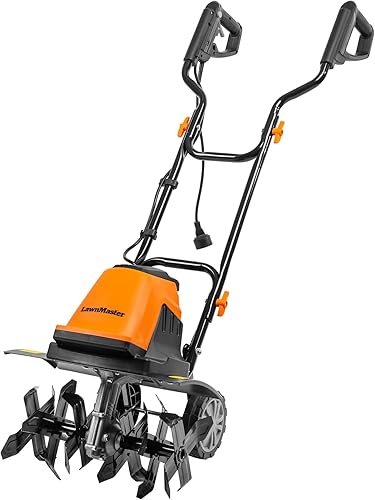 |  |  |  |  |  |  |
|---|---|---|---|---|---|---|---|---|---|---|
| Product | Sun Joe TJ603E | DOVAMAN 15-Amp Tiller | Greenworks 40V Tiller | LawnMaster TE1216M | BILT HARD 10-Amp Tiller | Sun Joe TJ605E | MZK 10.5A Tiller | SOARFLY Cordless Tiller | Cordless 360RPM Tiller | Saker 22V Tiller |
| Brand | Sun Joe | DOVAMAN | Greenworks | LawnMaster | BILT HARD | Sun Joe | MZK | SOARFLY | ONEVAN | Saker |
| Best for | Best Overall | Most Powerful | Best Cordless Performance | Best for Large Gardens | Best Compact Design | Most Durable Build | Best for Raised Beds | Best Battery Runtime | Best for Quick Cultivation | Best Adjustable Speed |
| The listing says | 13.5-amp motor, 16 inches wide, 8 inches deep 6 rust-proof steel tines | 18-inch width, 9-inch depth 15-Amp motor, 380 RPM | 40V battery, 45 minutes run-time 120 minutes charge time | 16-inch width, 9-inch depth 6 rust-resistant steel blades | 17,000RPM motor, 14" width, 8.7" depth 4 rust-resistant blades, 360RPM | 15-amp motor, 400 RPM 6 rust-proof steel tines | 12-inch width, 8-inch depth 10-amp motor, 430 RPM, 16 steel blades | Two 4.0AH batteries, 120 minutes run-time Adjustable height and auxiliary handle | Two 20V 3000mAh batteries, 50 minutes run-time 550W motor, 48 steel tines, 360RPM | 3 speeds: 200/270/360 RPM 4 steel tines, 9-inch width, 6.3-inch depth |
| More information | Check Price on Amazon | Check Price on Amazon | Check Price on Amazon | Check Price on Amazon | Check Price on Amazon | Check Price on Amazon | Check Price on Amazon | Check Price on Amazon | Check Price on Amazon | Check Price on Amazon |
1. Sun Joe Electric Corded Garden Tiller & Cultivator
Best for: Homeowners needing a reliable, all-purpose garden tiller.
The Sun Joe TJ603E uses a 13.5-amp motor to break up soil up to 16 inches wide and 8 inches deep. This width is helpful for clearing larger patches of grass or preparing wide vegetable rows in a single pass. The unit includes 6 steel tines that are rust-proof, which helps with longevity when working in damp garden soil.
The folding handle makes this machine easier to store in a crowded garage or shed during the off-season. Because it’s corded, you must work within reach of an outdoor power outlet. This tiller isn’t for someone who needs to reach the far corners of a large property without using long extension cords.
Use the deepest setting for initial soil breaking, then move to a shallower position to refine the texture.
Pros
- Powerful 13.5-amp motor for soil
- Wide 16-inch tilling path
- Folding handle for compact storage
- 3-position depth adjustment
Cons
- Requires a nearby power source
- Cord limits your reach
2. DOVAMAN 18-Inch Electric Garden Tiller Cultivator
Best for: Large gardens needing high-torque, efficient soil cultivation.
This tiller features a 15-amp motor that reaches 380 RPM, designed to handle tougher dirt with less effort. It covers an 18-inch width, allowing you to finish large vegetable beds much faster.
If you encounter rocks or thick roots, the built-in overload protection automatically shuts off the motor. This feature prevents internal damage when the tines become jammed, extending the tool’s service life. You should reset the unit once the obstruction is cleared to resume work.
The 24 lb weight makes it manageable for most adults, though it’s heavier than smaller, battery-powered alternatives. Use the four adjustable wheel positions to maintain stability across uneven terrain. If you’re working in tight, delicate flower beds, the wide 18-inch cut may be too difficult to control. In those cases, a smaller, narrower tool is a safer choice to avoid damaging existing plants.
Pros
- High 15-amp power output
- Wide 18-inch tilling path
- Built-in motor overload protection
Cons
- Heavier at 24 lbs
- Large size limits maneuverability
3. Greenworks 40V 10″ Cordless Tiller / Cultivator
Best for: Gardeners who prioritize cordless convenience and maintenance-free use.
The Greenworks 40V Tiller offers an adjustable tilling width of 8.25 to 10 inches, making it ideal for navigating narrow rows or small plots. You get 45 minutes of runtime on a single charge, which is sufficient for light weeding or soil aeration. It features 6-inch rear wheels that allow for easy maneuverability around existing plants.
If your garden sits far from an electrical outlet, the cordless design eliminates the need for extension cords. However, don’t use this tool to break up virgin sod or heavily compacted clay. It’s engineered for loose, broken-up dirt rather than heavy-duty excavation. If you encounter significant resistance, stop immediately to avoid straining the motor.
The unit requires 120 minutes to reach a full charge. Because it runs on a 40V battery, you avoid the hassle of gas, oil, and emissions.
Pros
- Fully cordless for total mobility
- Lightweight for easy handling
- Includes battery and charger
Cons
- Limited 45-minute battery runtime
- Not for hard, packed soil
4. LawnMaster TE1216M Electric Tiller 12-Amp
Best for users who want a mid-sized tiller for standard garden beds.
The LawnMaster TE1216M uses a 12-amp motor to provide a 16-inch wide cutting path and a 9-inch depth. Its six rust-resistant steel blades are engineered to cut through the toughest terrain. The two-stage gearbox and anti-clock mechanical clutch keep the machine running smoothly when the blades hit resistance. This creates a more stable feel when you’re working through dense or uneven soil.
It features an adjustable transit wheel with 3 positions, allowing you to set the depth based on the specific job. If you’re working on virgin soil, start at the shallowest wheel setting to avoid stalling the motor. Once the ground breaks, lower the wheel to reach the full 9-inch depth.
This model isn’t for someone looking for a cordless tool, as it requires a steady connection to electricity at all times. Relying on an extension cord means you must plan your path from the outlet outward to avoid tangling.
Pros
- Strong 12-amp motor
- Deep 9-inch tilling capacity
- Adjustable 3-position transit wheel
Cons
- Corded power only
- No battery option available
5. BILT HARD Electric Tiller Cultivator 14 inch
Best for: Small-to-medium garden beds and raised planting boxes.
Weighing just under 18 lbs, the BILT HARD 10-Amp Tiller is highly portable and easy to rotate in tight spaces. Its 14-inch tilling width provides a precise balance for weeding and mixing compost into established soil. The motor spins at high speeds up to 17,000 RPM, which helps the 4 steel tines slice through dirt at 360 RPM.
If you’re working in a tight flowerbed, use the 6-inch wheels in the lowered position to maintain depth control. If you’re moving the tool across a path, adjust the wheels to the transport position to save your energy.
The H-handle design and quick-bolt knobs make it simple to fold down when finished. Avoid using this unit for large-scale landscaping or turning over massive, uncultivated lawns, as the 8.7-inch depth limit will struggle with dense, compacted sod. This tool is best reserved for routine maintenance of garden soil rather than heavy-duty land clearing.
Pros
- Very lightweight at 17.98 lbs
- Easy to store and transport
- Good for mixing in compost
Cons
- Smaller 14-inch tilling width
- Not for large lawns
6. Sun Joe Electric Garden Tiller & Cultivator with Steel Tines
Best for: Tough soil conditions that require a more durable build.
The Sun Joe TJ605E uses a 15-amp motor to generate 400 RPM, providing the torque necessary to break through compact, stubborn ground. If you’re dealing with virgin soil or heavy clay, this power is essential to avoid stalling. You can manage the depth of your work using the 4-position wheel settings, which allow for a maximum tilling depth of 7.7 inches.
The unit features 6 rust-proof, steel-angled tines. You get a 15.7-inch tilling path, which balances efficiency for larger garden beds with the maneuverability needed for tighter rows.
While the foldable handle simplifies storage, remember that this is a corded tool. If your garden is further than your longest outdoor extension cord, you’ll need a different power source. This model prioritizes raw digging capability over portability. If you need to navigate small, raised containers, the weight and width of this tiller may prove too cumbersome for your specific layout.
Pros
- Powerful 15-amp motor
- Rust-proof steel tines
- Adjustable wheel depth control
Cons
- Heavier than basic cultivators
- Corded, so range is limited
7. MZK 12-Inch 10.5A Electric Tiller Cultivator
Best for: Quick preparation of raised garden beds.
The MZK 10.5A Tiller uses a 10-amp copper motor to provide 430 RPM for consistent digging and seed sowing. With a 12-inch width and 8-inch depth, it fits comfortably into most raised beds without damaging the frame.
It’s a low-maintenance tool that starts as soon as you plug it in. Because it lacks a gas engine, you avoid the hassle of oil changes and fuel storage. If you’re working in vegetable beds or orchards, this unit handles the job efficiently. However, this tiller isn’t for deep plowing or working on large, rocky garden areas. If your soil is dense with rocks, the steel blades will struggle; choose a heavy-duty gas tiller for that terrain instead.
Pros
- Compact 12-inch width
- Efficient high-speed motor
- Easy, plug-in operation
Cons
- Limited to smaller garden beds
- Requires electrical cord
8. SOARFLY Cordless Tiller Cultivator 9″ Width 6.6″ Depth
Best for: Long sessions in areas without power outlets.
The SOARFLY Cordless Tiller stands out for its two 4.0Ah batteries, which provide up to 120 minutes of total runtime. This is the best option if you have a large area to cover and don’t want to stop and recharge. The ergonomic handle is adjustable, which helps reduce fatigue during long hours of work.
The 360 RPM motor is designed to operate in properly moistened soil. However, avoid using this tool on dry, rocky, or heavily compacted ground. Attempting to force it through such conditions will only drain your battery prematurely and strain the motor.
Use this tiller for routine maintenance, such as aerating flower beds or weeding vegetable plots. It isn’t for heavy-duty breaking of extremely hard, dry, or rocky ground where a corded motor would be more effective.
Pros
- Excellent 120-minute battery runtime
- Dual batteries included
- Fully cordless operation
Cons
- Not for hard, dry clay
- Lower power than corded models
9. Cordless 360RPM Tiller
Best for: Fast cultivation and weeding in tight garden spots.
This cordless tiller from ONEVAN features a 550W motor that hits 360 RPM, making it very effective for aerating lawn soil and mixing in nutrients. It comes with two 3.0Ah batteries and a fast charger, providing about 50 minutes of runtime. By using the batteries alternately, you maintain consistent work efficiency throughout your session.
The detachable gears allow you to remove weeds that get tangled in the 48 steel tines during use. If the motor stalls, simply disassemble the gears to clear the debris. The safety button and trigger mechanism prevent the machine from starting by accident. You must press both simultaneously to engage the motor.
This tool isn’t meant for deep tilling in heavy, unworked ground, as its 9.5-inch width is quite narrow. Use it primarily for established garden beds where the soil is already loose. If you encounter rocky or hard-packed clay, the 6.7-inch depth limit may prove insufficient.
Pros
- Two batteries for rotating use
- Easy-to-remove tangled weeds
- Safety start button mechanism
Cons
- Narrow 9.5-inch tilling width
- Not for heavy, deep digging
10. Saker 22V Cordless Garden Tiller
Best for: Precise control over different types of gardening tasks.
The Saker 22V Tiller includes 3 speed settings (200, 270, and 360 RPM), letting you choose the right power for weeding versus deep tilling. It’s fully cordless and uses two 22V batteries, which provide 30 minutes of runtime per pack. The ergonomic grip and adjustable handle make it comfortable for users of different heights.
Use the 200 RPM setting for delicate weeding to avoid damaging nearby plants. Switch to the 360 RPM speed when working with the 4 steel tines to reach the full 6.3-inch depth.
It’s lightweight and easy to maneuver in small spaces or raised beds.
This isn’t the right choice if you need to work for more than an hour at a time without stopping to change or charge batteries. Users often fail to engage both the button and the trigger simultaneously, which prevents the motor from starting; always check these dual safety locks first.
Pros
- 3 adjustable speed settings
- Ergonomic and comfortable design
- Cordless mobility for small beds
Cons
- Short 30-minute battery life per pack
- Not for large, heavy-duty tasks
How to Choose in Sixty Seconds
Should I choose a corded or cordless tiller?
Choose corded if you have a large garden and need constant power to break up hard, compact soil. Corded tillers are generally more powerful and don’t have run-time limits, which is better for heavy-duty work. Choose cordless if your garden is small or if you need to work in areas far from an outdoor outlet. Cordless models offer more freedom of movement but are limited by battery life. Always check the battery capacity and ensure the tool is designed for the type of soil you have, as cordless motors may struggle with heavy, dry clay compared to their corded counterparts.
If you choose cordless, prioritize models with at least two batteries. This allows you to charge one while the other is in use, effectively doubling your runtime to avoid mid-project interruptions.
What tilling width do I need for my space?
The tilling width determines how much ground you cover in one pass. A wide tilling path is ideal for larger vegetable plots where you want to clear ground quickly. If you have narrow rows, raised beds, or tight flower beds, a smaller width of 9 to 12 inches is much better. Using a tiller that’s too wide for your space will make it difficult to maneuver without damaging your existing plants. Measure the distance between your garden rows or the size of your beds before ordering to ensure the machine fits.
What maintenance does an electric tiller require?
Electric tillers are much lower maintenance than gas engines because they don’t require oil changes, fuel filters, or spark plug replacements. You should keep the tines clean of dirt and debris after every use to prevent rust, especially if you store the tool in a damp shed. Check the bolts and handle knobs periodically to ensure they’re tight. If your model has detachable gears for clearing weeds, make sure to clear those regularly to prevent motor strain.
If your tiller features an overload protection system, pay attention to the motor sound. If the tines jam on a large rock or root, the motor will shut off automatically to prevent damage. When this happens, clear the obstruction before attempting to restart the machine. Ignoring these jams can lead to premature motor failure.
The Sun Joe TJ603E is our top pick for reliable, high-power performance, while the SOARFLY Cordless Tiller is the best choice for those needing extended runtime without a cord. Measure your garden beds to ensure the tilling width matches your workspace. Clear your garden of rocks or roots before starting, and check the manual to adjust the wheels for proper depth control.
Frequently Asked Questions
Is an electric tiller powerful enough to break new ground?
Electric tillers are primarily designed for maintaining existing garden beds, aerating soil, or mixing in compost. While some high-torque models handle tough soil, they are not intended for turning over large, uncultivated lawns. You may need multiple passes to achieve the desired texture in heavily compacted ground.
Do I need to buy anything else before I start?
Most corded tillers don’t include an extension cord, so you must ensure you have one that’s rated for outdoor use and heavy-duty power requirements. Check the manufacturer’s manual to find the correct gauge for your specific corded model to prevent power loss. If you choose a cordless model, ensure you have a clear area to store your batteries and charger away from extreme heat or moisture.
What part of an electric tiller usually fails first?
The tines and motor experience the most wear over time. Tines can become blunt from hitting rocks, while the motor may suffer if pushed beyond its limits in hard clay. Look for models with built-in overload protection to prevent premature motor failure during difficult tasks.
Is the simplest model on the list enough for a small garden?
A lower-amperage model like the BILT HARD 10-Amp Tiller is sufficient for small, well-maintained gardens or raised beds. These units are easier to maneuver, reducing the physical effort required for light weeding. You do not need a heavy-duty machine if you only plan to perform light seasonal prep.
Conclusion
Once you’ve picked the perfect tool, you’ll find that preparing your soil isn’t such a chore anymore. You’ll have more time to focus on planting your favorite flowers or vegetables. Don’t wait for the next season to start; grab your new gear and get out into the yard this weekend.