A lightweight garden spade is a small tool, but the differences between these ten aren’t small. The head material decides how the tool handles clay and rocks. The handle decides how your hand feels after an hour. Some of these are one piece of molded composite. Some are welded steel with a wooden grip. That’s the real choice here.
Best overall: Fiskars FiberComp Hand Trowel. An oversized cast-aluminum head gives it digging power, while the FiberComp body keeps the weight down. It comes with a full lifetime warranty.
Best stainless steel: WORKPRO 11″ Hand Trowel. A polished stainless steel head resists rust and corrosion, and the hardwood handle comes from FSC certified forests. It weighs 6.3 oz and measures about 11 inches.
Best for seed planting: Fiskars 4-in-1 Trowel. Four seed-planting tools in one, with debossed English and metric measurements that won’t fade. Rust-proof FiberComp, full lifetime warranty.
The rest of this guide walks through each trowel, then answers the questions that come up before you order one.
All 10 products side by side — scroll sideways to see every column.
| Top Pick | Best for Hand Pain | Also Great | Best for Bulb Planting | Best for Raised Beds | Best for Seed Planting | Best for Filling Pots | Best for Hard Clay | Best for Cutting Roots | Best for Weeding | |
| Preview |  |  |  | 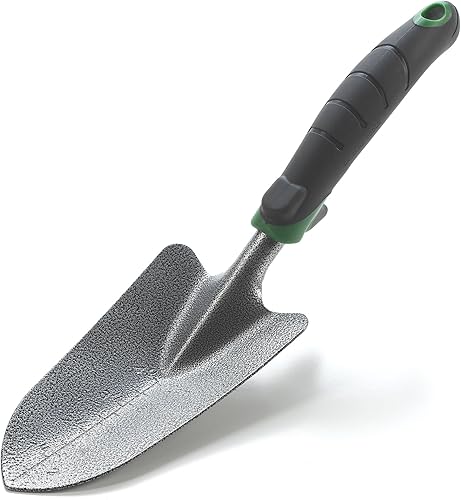 |  |  |  | 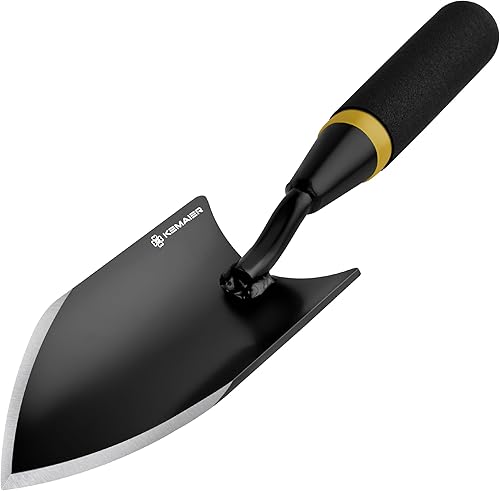 |  |  |
|---|---|---|---|---|---|---|---|---|---|---|
| Product | Fiskars FiberComp Hand Trowel | Fiskars Ergo Trowel | WORKPRO 11" Hand Trowel | Edward Tools Garden Trowel | Corona Comfort Trowel | Fiskars 4-in-1 Trowel | Fiskars FiberComp Soil Scoop | Kemaier Carbon Steel Trowel | Kemaier Stainless Steel Trowel | Stainless Steel Garden Trowel |
| Brand | Fiskars | Fiskars | WORKPRO | Edward Tools | Corona Clipper | Fiskars | Fiskars | Kemaier | Kemaier | Showvigor |
| Best for | Best Overall | Best for Hand Pain | Also Great | Best for Bulb Planting | Best for Raised Beds | Best for Seed Planting | Best for Filling Pots | Best for Hard Clay | Best for Cutting Roots | Best for Weeding |
| The listing says | Ergonomic hand trowel with oversized head Cast-aluminum head digs tough soil, resists rust | Heavy duty ergonomic hand trowel Cast-aluminum head digs tough soil, resists rust | Polished stainless steel resists rust and corrosion Digs tough soil, removes weeds, mixes soil | Carbon steel resists bending and breaking Depth markers for consistent planting | For digging, planting and transplanting Sturdy blade penetrates soil easily | Four seed-planting tools in one Trowel, stylus, widger and measuring tool | Scoops soil, dirt and birdseed Oversized scoop speeds up work | 65 manganese steel, heat treated 2.5 mm steel plate V-shaped blade | 2.5mm stainless steel, HRC50 hardness 3-inch sawtooth cuts branches and weed roots | For planting, transplanting, weeding and moving soil Smooth surface rinses clean easily |
| More information | Price on Amazon | Price on Amazon | Price on Amazon | Price on Amazon | Price on Amazon | Price on Amazon | Price on Amazon | Price on Amazon | Price on Amazon | Price on Amazon |
1. Fiskars FiberComp Hand Trowel
Best for: The gardener who wants one trowel that does everything
This is the pick that covers the most ground. The cast-aluminum head is oversized, which the listing says boosts power for digging in tough soil and enhances rust resistance. The FiberComp body keeps the whole tool light, so you’re not fighting the weight of the head every time you lift a scoop.
The ergonomic handle is there to give you more control and reduce fatigue, which matters if you’re planting a whole bed rather than a single pot. The polished aluminum head is described as staying sharp through heavy use. There’s a hang hole at the end for storage, and Fiskars backs it with a full lifetime warranty.
This isn’t the trowel for someone who wants a traditional-feeling handle in their hand. The FiberComp design is a deliberate choice toward light weight over a traditional feel, and if that feel is what you’re after, the WORKPRO or the Corona will suit you better.
Pros
- Oversized cast-aluminum head for tough soil
- Lightweight FiberComp body reduces hand fatigue
- Full lifetime warranty from Fiskars
Cons
- FiberComp composite body
2. Fiskars Ergo Garden Trowel
Best for: The gardener with hand pain or a long planting session
The Ergo Trowel is the same family as the FiberComp, built around a cast-aluminum head that the listing says boosts digging power and resists rust. What separates it’s the ergonomic handle, which the seller describes as giving more control and reducing fatigue. If grip comfort is your main concern, that’s the feature to weigh.
The polished aluminum head stays sharp through heavy use, and the tool has a hang hole for storage. It carries a lifetime warranty, same as the FiberComp. In daily use, that combination means a trowel you can leave outside, rinse off and pick up again next weekend without fuss.
The listing doesn’t describe a scale, so if you plant bulbs at a set depth, look at the Edward Tools or the Kemaier stainless model instead.
Pros
- Ergonomic handle designed to reduce fatigue
- Cast-aluminum head resists rust
- Lifetime warranty included
Cons
- The box lists 1 Fiskars Ergo Trowel with hang hole and not a seed dispenser, so that is a second purchase.
3. WORKPRO 11″ Garden Hand Trowel
Best for: The gardener who leaves tools outside in the rain
The head here is high-hardness polished stainless steel, which the listing says is extremely resistant to rust and corrosion and won’t deform, bend or break in use. That’s the case for stainless in one line: it shrugs off moisture and soil far better than a plain carbon blade.
The handle is hardwood, sourced from FSC certified sustainable forests, and the listing says the grip allows easy wrist movement and reduces hand fatigue. At roughly 11 inches long and 6.3 oz, it’s a longer tool than most here, which changes how you hold it. There’s a hanging hole and a lanyard for storage.
Eleven inches is a deliberate length, and in a tight raised bed or a crowded pot it gives you more handle than you may want.
Pros
- Polished stainless steel head resists rust and corrosion
- Hardwood handle from FSC certified forests
- Hanging hole and lanyard for storage
Cons
- At 11 inches, a longer hand trowel
4. Edward Tools Garden Trowel
Best for: The gardener planting bulbs at a set depth
The carbon steel head is described as bend proof and break proof, built for confident digging in heavy clay or rocky soils. Carbon steel is the harder material of the two common blade types, and the listing leans into that with a rust proof, bend proof and break proof claim across the design.
What makes this one different is the depth markers. They’re printed on the blade so you can measure as you plant, which turns “about right” into a repeatable depth for bulbs and transplants. The ErgoGrip rubber handle is there for comfort and better leverage in heavy or rocky ground.
The rubber grip is the whole point of the ErgoGrip design, and if you prefer a smooth handle you’ll notice the difference on the first dig.
Pros
- Carbon steel head for heavy clay and rocky soil
- Depth markers for consistent planting
- Lifetime warranty with replacement
Cons
- ErgoGrip rubber handle
5. Corona Comfort Trowel
Best for: The gardener working in raised beds and tight spaces
This is the classic shape done as a single solid unit. The listing describes a lightweight one-piece aluminum alloy design with a 3-inch wide blade and a 12-inch total length. One piece means there’s no joint between handle and head to work loose.
The compact, well-balanced design is meant to give you control in confined areas without disturbing nearby plants, and the listing says the lightweight feel with solid balance helps reduce hand fatigue over long sessions. It’s aimed at everything from seedlings to general garden care.
The 3-inch blade is built for precision around roots and bulbs, not for shifting dirt by the handful. For that job, look at the Fiskars Soil Scoop.
Pros
- Solid aluminum alloy design, no joint to loosen
- 3-inch wide blade, 12-inch total length
- Balanced for tight spaces and raised beds
Cons
- Listed at 12-inch total length, which anyone with a compact raised bed has to plan around.
6. Fiskars 4-in-1 Seed Planting Garden Trowel and Seed Sower Tool
Best for: The gardener starting seeds indoors or in trays
This one isn’t really a trowel with extras. It’s four seed-planting tools in one: a trowel, a stylus, a widger and a measuring tool, all integrated into a two-piece design. If you sow seeds in trays or modules, those four jobs are exactly the ones you do.
The measurements are debossed into the trowel and widger in both English and metric, and the listing says they won’t fade or erode the way printed markings can. The whole thing is made of lightweight, rust-proof FiberComp, and it comes with a full lifetime warranty.
This isn’t the tool for digging in tough soil. The listing is built around seed planting, not heavy digging, so if your main job is breaking ground in clay, the Kemaier carbon steel or the Edward Tools will serve you better.
Pros
- Four seed-planting tools in one piece
- Debossed English and metric measurements
- Rust-proof FiberComp, full lifetime warranty
Cons
- The box lists a trowel, stylus, widger and measuring tool and not a seed packet, so that is a second purchase.
7. Fiskars FiberComp Soil Scoop
Best for: The gardener filling pots and moving soil fast
A scoop is a different tool from a trowel, and this one is honest about it. The oversized scoop displaces more soil per load, which the listing says speeds up work when you’re planting vegetables or transplanting houseplants. It even works for scooping birdseed.
The unibody design is described as not loosening, bending at the neck or breaking while digging. That’s the key claim for a scoop, since the neck takes the load when you dig. The FiberComp body is lightweight, won’t rust, and the listing calls it stronger than steel.
This isn’t for precision work around roots. An oversized scoop is the opposite of a narrow blade, so if you’re transplanting seedlings in tight quarters, the Corona Comfort Trowel is the better shape for that job.
Pros
- Oversized scoop moves more soil per load
- One-piece design won’t loosen or bend at the neck
- Lightweight, rust-proof FiberComp, lifetime warranty
Cons
- Too wide for precise work around roots
8. Kemaier Heavy Duty Gardening Hand Trowel
Best for: The gardener breaking new ground in hard clay
It’s made from 65 manganese steel, precision smoothed and heat treated, and the listing says it’s built to power through hard clay, rocky patches and yards overgrown with thick weeds. The blade is a solid 2.5 mm steel plate with a sharp V shape.
The handle and blade are hand-welded into one smooth, seamless piece, and the listing describes those reinforced joints as rock-solid so the trowel won’t snap or crack under high-pressure jobs. The blade holds its sharpness for a long time and can be resharpened quickly.
This isn’t the trowel for someone who wants the lightest tool in the bag. A 2.5 mm steel plate and welded construction add up to a solid tool, and the listing positions it for serious gardeners and professional landscapers rather than casual potting.
Pros
- 65 manganese steel, heat treated for daily heavy use
- 2.5 mm solid steel plate, resharpenable blade
- Seamless hand-welded handle and blade joint
Cons
- Built heavy for demanding digging work
9. Kemaier Heavy Duty Gardening Hand Trowel
Best for: The gardener cutting weed roots and small branches
Two features set this apart. First, the 2.5 mm stainless steel is high-temperature quenched to a stated hardness of HRC50, which the listing says handles hard soil, tangled roots and rocky yards. Second, there’s a sawtooth on the left side of the blade for cutting small branches and weed roots.
There’s also a built-in scale for precise bulb planting, and the handle connects through a solid full-tang metal tube, which the listing says puts an end to tool breakage. Bright yellow markings on the handle make it easy to spot where you left it. It weighs 0.66 pounds, with a 5.7-inch blade and 2.68-inch width.
This isn’t the trowel for someone who wants a plain blade. The sawtooth is a real cutting edge on the side of the tool, and if you only ever scoop soil, you’re carrying a feature you won’t use.
Pros
- 2.5 mm stainless steel, HRC50 hardness
- Sawtooth edge for weed roots and branches
- Full-tang metal tube through the handle
Cons
- Sawtooth edge is an extra you may not need
10. Stainless Steel Garden Trowel
Best for: The gardener who wants a bright, easy-to-find tool
The bright yellow color is the practical feature here. The listing says it makes the tool easy to see, which cuts down on losing it in the beds. The head is aluminum alloy with a pointed tip for penetrating soil, and the tool measures 12 by 2.95 inches.
The handle is soft rubberized and non-slip, designed to reduce hand fatigue over long sessions, and there’s a hanging hole for storage. The listing also points out that the smooth surface rinses clean after use, which is a small thing that matters when you’re going from one planting job to the next.
This isn’t the tool for someone who wants a heavy-duty digging blade. The listing describes aluminum alloy construction and a pointed tip for penetration, and it positions the trowel as a gift for beginner and experienced gardeners alike rather than a landscaper’s workhorse.
Pros
- Bright yellow color makes it easy to find
- Soft rubberized non-slip ergonomic handle
- Smooth surface rinses clean after use
Cons
- Aluminum alloy head, not a heavy digging blade
Also Worth Considering
Three more listings came close. The Garden trowel is a small hand shovel with a scale on the blade, which puts it in the same group as the Edward Tools for anyone who plants at set depths. The Zoyiancy Stainless Steel Pointed Garden trowel is a pointed stainless tool aimed at digging and planting. And the Heavy Duty Garden trowel pairs a stainless steel head with a wood handle and a comfort grip for digging, weeding and transplanting. Any of the three would suit a gardener who wants a straightforward hand tool, and each one is worth a look if the ten above don’t match what you had in mind.
How to Choose a Lightweight Garden Spade in Sixty Seconds
What’s the difference between a trowel and a soil scoop?
A trowel has a narrow, pointed blade for digging one hole at a time, working around roots and planting bulbs. A scoop has a wide, deep bowl for lifting soil in bulk. The Fiskars FiberComp Soil Scoop is the scoop on this list, and its oversized bowl is built to displace more soil per load. The Corona Comfort Trowel is the other end of that scale, with a narrow blade made for control in tight spaces. If you do both jobs, you’ll want both tools, because no single blade shape does both well.
Which handle material should I pick?
It comes down to how you garden. A rubberized or ergonomic grip, like the ones on the Edward Tools ErgoGrip or the Fiskars Ergo Trowel, is designed to reduce fatigue and give better leverage in heavy soil. A hardwood handle, like the WORKPRO’s FSC certified handle, gives a traditional feel and easy wrist movement. A one-piece composite body, like the Fiskars FiberComp, keeps the tool light and has no joint to work loose. None of these is wrong. Match it to how long you garden at a stretch.
Do I need a heavy-duty blade or a light one?
Match the blade to your soil. If you’re digging in hard clay, rocky patches or thick weeds, a carbon steel or manganese steel blade is the right call, and the Kemaier carbon steel trowel is built around exactly that job with a 2.5 mm steel plate. If your beds are loose and raised, a lighter aluminum or composite head moves fast and tires your hand less. Buying heavy steel for soft potting mix means carrying weight you never use. Buying a light blade for clay means fighting the soil every hole.
What should I check before I order?
Check three things on the listing. First, the head material, because it decides what soil the tool handles. Second, the length and weight, since an 11-inch tool like the WORKPRO handles differently from a compact one. Third, the warranty, because a full lifetime warranty from Fiskars or Edward Tools tells you the seller expects the tool to last. Also confirm what’s included, since some listings ship a single trowel and others include a hang hole or lanyard.
Frequently Asked Questions
What is the lightest trowel on this list?
Weight is stated on only two listings here: the WORKPRO 11″ Hand Trowel at 6.3 oz and the Kemaier Stainless Steel Trowel at 0.66 pounds. For the rest, the listings describe the Fiskars FiberComp tools and the Corona Comfort Trowel as lightweight.
What do I have to do to keep one of these in good shape?
Not much, and that’s the point of the materials here. Stainless steel heads, like the WORKPRO and the Kemaier stainless trowel, are described as resistant to rust and corrosion, and the Fiskars FiberComp tools are described as rust-proof. The Kemaier carbon steel trowel is the one that asks for attention, since the listing says its blade can be resharpened.
What goes wrong with a garden trowel first?
The joint between the handle and the blade. The Fiskars FiberComp Soil Scoop is a one-piece design that the listing says won’t loosen or bend at the neck, and the Corona Comfort Trowel is a one-piece aluminum alloy design for the same reason. The Kemaier carbon steel trowel uses a seamless hand-welded joint.
Is the simplest trowel on this list enough for most gardeners?
For most home gardeners, yes. If you’re planting in beds and pots with soil that isn’t compacted, a straightforward trowel does everything you need. The Corona Comfort Trowel covers digging, planting and transplanting with one piece and no extra features, while the Fiskars FiberComp Hand Trowel adds an oversized head for tougher soil. You only need the specialized tools for a specific job.
Conclusion
The Fiskars FiberComp Hand Trowel is the one to start with, because the oversized cast-aluminum head and the light FiberComp body cover the most jobs without asking you to think about it. If rust is your worry, the WORKPRO 11″ Hand Trowel is the second pick, with a stainless head and a hardwood handle. Next step: check the head material against your own soil, then order the one that matches.