Finding the right weeding tool depends on your garden layout, soil type, and physical comfort. There is no single best tool, as needs vary between clearing sidewalk cracks and working in raised beds. The best choice balances reach, root-removal mechanisms, and handle ergonomics to match your specific weeds and physical needs.
All 10 products side by side — scroll sideways to see every column.
| Top Pick | Best for Measuring | Best for Large Areas | Best Ergonomic Hand Weeder | Best for Sharpness | Best for Tight Spaces | Best for Dandelions | Best for Precision | |||
| Preview |  |  |  |  |  |  |  | 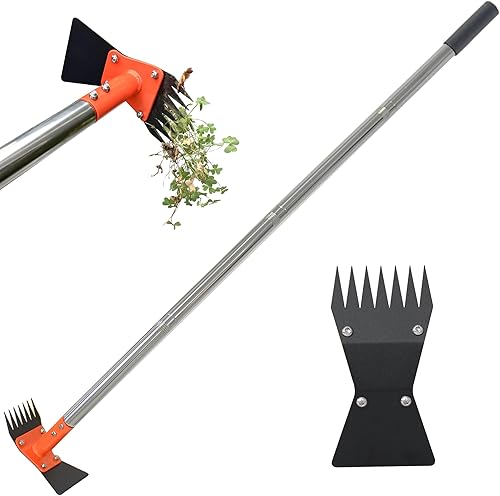 | 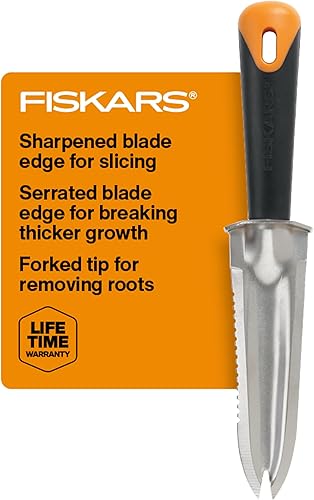 |  |
|---|---|---|---|---|---|---|---|---|---|---|
| Product | Grampa's Weeder Original | Nisaku Hori Hori Knife | Walensee Action Hoe | Fiskars Ergo Hand Weeder | Japanese Weeding Sickle | Garden Guru Crack Weeder | WORKPRO Dandelion Weeder | 2-in-1 Garden Hoe Rake | Fiskars Steel Garden Knife | SUIZAN Nejiri Kama Sickle |
| Brand | Grampa's Weeder | Nisaku | Walensee | Fiskars | MASAKIYO | Garden Guru Lawn & Garden Tools | WORKPRO | CKLT | Fiskars | SUIZAN |
| Best for | Top Pick | Best for Measuring | Best for Large Areas | Best Ergonomic Hand Weeder | Best for Sharpness | Best for Tight Spaces | Best for Dandelions | — | — | Best for Precision |
| The listing says | 45" stand up long handle Removes weeds without bending | Japanese stainless steel construction Serrated and straight edge blades | Adjustable 66 inch long handle Triangular hollow head design | Ideal for weeding and uprooting Cast-aluminum head for leverage | High carbon steel construction Sharp edge retention | Stainless steel L-shaped head Ergonomic soft-grip handle | Stainless steel two-pronged fork High-hardness rust-resistant steel | 3.75-inch rake and trapezoid hoe Tempered spring steel construction | Multi-purpose digging and weeding Steel head with serrated edges | Two-layer Japanese carbon steel 13-inch length |
| More information | Buy on Amazon | Buy on Amazon | Buy on Amazon | Buy on Amazon | Buy on Amazon | Buy on Amazon | Buy on Amazon | Buy on Amazon | Buy on Amazon | Buy on Amazon |
1. Grampa’s Weeder Original Stand Up Weed Puller Tool with Bamboo
Best for: Someone who wants to clear weeds without kneeling or bending over.
This tool uses a classic 4-claw design to grab weeds by the root. Because it has a long 45-inch handle, you can stand upright while working, which is a major benefit for those with back pain. It relies on a simple lever motion to pull the weed out of the ground.
It works best in softer soil, especially after rain or watering has loosened the earth. If your garden has hard clay or rocky surfaces, the claws may not penetrate as deeply as you need. This tool isn’t for someone looking to perform delicate, precision weeding around small, crowded seedlings.
The most common mistake is overthinking the mechanics. Because the design dates back to 1913, users often expect a complex process, but the tool functions best with a straightforward, vertical motion.
Good if:
- You want to avoid kneeling on the ground.
- You prefer a simple, mechanical design.
- You have softer garden soil.
Skip it if:
- You have very rocky or hard clay soil.
- You need to weed in tight, crowded spaces.
2. NISAKU NJP650 The Original Hori Hori Namibagata Stainless Steel Weeding
Best for: Gardeners who need one versatile tool for digging, cutting, and weeding.
This Japanese-made knife features both a straight edge and a serrated edge, making it useful for more than just weeding. The 7.25-inch stainless steel blade includes depth markings to help with planting bulbs at the right level. It’s a robust tool that feels solid in the hand during long sessions.
The 5.25-inch wooden handle provides a secure grip, but it’s a manual tool, so you’ll be working at ground level. If you have back pain or limited mobility, you should choose a long-handled cultivator instead. This knife is designed for precision work where you can reach the soil directly.
When organizing your workspace, you can hang the knife on a peg rack to keep your shed tidy. Weighing 10 oz, it’s sturdy enough for landscaping but light enough for extended camping trips.
Good if:
- You want a multi-purpose tool for planting and weeding.
- You need to measure planting depth accurately.
- You prefer a high-quality, durable stainless steel blade.
Skip it if:
- You need a long handle to reach weeds from a standing position.
- You don’t want to work at ground level.
- You require a specialized tool for heavy-duty clearing rather than versatile gardening.
3. Walensee Action Hoe
Best for: Clearing large areas of weeds quickly using a push-pull motion.
The Walensee Action Hoe is designed for efficiency. Its triangular, oscillating head cuts through weeds just below the surface as you push and pull it across the soil. The handle is adjustable from 36 to 66 inches, allowing you to set it to a height that prevents soreness during long work sessions.
Because it’s a scuffle hoe, it’s meant for shallow weeding rather than deep root extraction of thick taproots. It isn’t ideal for someone who needs to extract deep-rooted dandelions individually in a very precise manner. If you’re working in tight, crowded container gardens, the wide loop head may prove too cumbersome to maneuver without damaging your existing plants.
Good if:
- You have a large garden bed to clear.
- You want to adjust the handle to your specific height.
- You prefer a tool that works with a simple motion.
- You need a versatile tool for ditching, seeding, or loosening soil.
Skip it if:
- You need to target deep, stubborn taproots one by one.
- You’re working in a very small or crowded container garden.
- You require a heavy-duty tool for breaking up compacted, rocky ground.
Assembly takes only one minute by screwing the four pieces together. Always prioritize safety during this process to avoid potential scratches.
4. Fiskars Ergo Garden Hand Weeder Tool
Best for: Someone who needs a comfortable, precise tool for invasive garden weeds.
The Fiskars Ergo Hand Weeder is built with a cast-aluminum head that resists rust and stays sharp. The handle includes a SoftGrip feature, which helps reduce hand fatigue when you’re pulling tough weeds. Its angled head provides the leverage needed to pop roots out of the ground.
This is a hand-held tool, so you’ll need to get down to the level of your plants. If you have chronic back pain or limited mobility, the necessity of kneeling for extended periods makes this tool a poor choice for your routine. Use this weeder specifically for targeted tasks, such as removing dandelions or maintaining an herb garden, where precision matters more than speed.
If you’re clearing a large lawn or a vast garden bed, don’t rely on this tool alone. The manual effort required for deep taproots will exhaust you long before the job is finished. Instead, reserve this for spot-weeding where you need to protect surrounding plants.
Good if:
- You want a rust-resistant, durable hand tool.
- You struggle with hand fatigue and need a comfortable grip.
- You need leverage for tough, invasive weeds.
Skip it if:
- You can’t comfortably reach down to ground level.
- You’re looking to clear a large surface area quickly.
5. Japanese Weeding Sickle
Best for: Precision weeding in tight, delicate garden areas.
This high-carbon steel sickle is crafted by hand and is known for its sharpness. It’s designed to cut weeds cleanly at the root with a quick, sweeping motion. Because it’s so lightweight, you can use it for a long time without feeling weighed down.
The blade is very sharp, so it requires careful handling. If you’re clearing a dense patch, use the tip to isolate individual stems before pulling the blade toward you. This prevents accidental damage to nearby flowers or vegetables.
It isn’t the best choice for a beginner who is uncomfortable using a sharp, exposed blade, or for someone who prefers a tool with a mechanical root-grabbing feature. If you find yourself frequently hacking at the soil rather than slicing, switch to a serrated trowel instead.
Good if:
- You need a very sharp, precise cutting edge.
- You prefer a lightweight, traditional tool.
- You’re comfortable with manual, close-up weeding.
Skip it if:
- You’re a beginner who prefers a tool with a safety guard.
- You want a tool that grabs roots mechanically rather than cutting them.
- You’re working in rocky soil where the fine edge may chip or dull prematurely.
6. Garden Guru Patio Crack Weeder Tool with Ergonomic Handle
Best for: Removing weeds from narrow gaps like patio cracks and driveways.
The L-shaped head of this tool is specifically designed to fit into tight spaces where other tools can’t reach. It’s made of stainless steel, so it’s strong enough to pull weeds by the roots without bending. The handle is contoured with finger grips to help you keep control while applying pressure.
This tool is highly specialized for hard surfaces. It isn’t designed for general weeding in soil or garden beds, so it would be a poor choice for someone looking for a general-purpose lawn or vegetable garden tool. If you attempt to use this in loose soil, you’ll find it lacks the leverage required to clear wide areas efficiently.
Good if:
- You need to clean weeds out of sidewalk or patio gaps.
- You want a durable, rust-resistant stainless steel tool.
- You have trouble gripping small or narrow handles.
- You prefer tools backed by a lifetime warranty.
Skip it if:
- You’re looking for a tool for soil, flower beds, or lawns.
- You need to weed large areas rather than tight cracks.
- You require a tool that can dig wide holes or cultivate garden beds.
7. WORKPRO 11.5″ Dandelion Weeder Puller Tool with Soft Handle
Best for: Targeting stubborn dandelions and thistles in lawns or beds.
The WORKPRO Dandelion Weeder uses a two-pronged stainless steel fork to cut through roots deep in the soil. It’s lightweight at 5.3 ounces, making it easy to carry around the yard for extended sessions. The handle is designed with a non-slip, soft-grip plastic to keep your hand steady while you dig and pry, which helps prevent wrist fatigue.
This tool is strictly for manual, individual weed removal. It doesn’t provide the speed of a scuffle hoe or the comfort of a stand-up tool, so it isn’t for someone who needs to clear large areas of weeds in one sitting. If you’re dealing with a dense patch of invasive growth, you’ll find this tool too slow; it’s best reserved for precision work in bonsai, garden beds, or small yards.
Good if:
- You need to remove deep-rooted weeds like dandelions.
- You want a lightweight, sturdy tool for your garden kit.
- You prefer a simple, hand-operated design.
Skip it if:
- You’re trying to clear a large, overgrown space.
- You need a tool with a long handle to avoid bending.
- You require a heavy-duty mechanical solution for field-scale clearing.
8. 2-in-1 Garden Hoe and Weed Puller Rake 61 Inch Spring
Best for: Gardeners who want to cultivate soil and pull weeds using a single, multi-functional implement.
This tool features a 3.75-inch rake on one side and a sharp trapezoid hoe on the other. It’s built from tempered spring steel, which is designed to resist bending. The handle is adjustable up to 61 inches, allowing you to stand upright while you work.
The dual-action head is quite large, which makes it great for open spaces but difficult to use in crowded flower pots or between closely planted rows. It isn’t the right tool for someone who needs to do very delicate, precise weeding around small plants.
Many users fail to adjust the 4-section handle correctly, which forces them to hunch over and negates the ergonomic benefits. If you feel strain in your lower back, shorten the handle until the tool head rests naturally at your feet while you stand fully upright.
Good if:
- You want to loosen soil and pull weeds simultaneously.
- You need a long handle to reach across garden beds.
- You prefer high-density spring steel for durability.
Skip it if:
- You have a small garden with very little space between plants.
- You need a tool for delicate, detailed weeding.
9. Fiskars Steel Garden Knife
Best for: Multi-purpose tasks including planting, weeding, and root removal.
Like other garden knives, this tool is designed for versatility. It includes serrated and sharpened edges, along with a forked tip that helps with pulling roots. The large, comfortable handle makes it easy to use for extended periods, and it comes with a lifetime warranty.
If you’re clearing dense patches, use the serrated edge to saw through stubborn stems before using the forked tip to pry out the root system. This prevents the tool from slipping during high-resistance tasks. If you’re splitting seedlings, use the sharpened edge for a clean cut that minimizes damage to the delicate root structure.
Because it’s a handheld tool, it isn’t for anyone who requires a long-handled puller to avoid bending. It’s also a general-purpose tool, so it may not be as specialized as a dedicated crack weeder or a stand-up dandelion puller. Using this for heavy prying in rocky soil can be difficult; it performs best in loose garden beds where the steel head can move through the earth without obstruction.
Good if:
- You want a single implement that can handle both planting and weeding tasks.
- You prefer a comfortable, ergonomic grip.
- You want the security of a lifetime warranty.
Skip it if:
- You require a stand-up tool for back comfort.
- You need a highly specialized tool for a single, specific type of weeding.
10. SUIZAN Nejiri Kama Weeding Sickle 13″- Japanese Hand Hoe Weed
Best for: Precision weeding in vegetable gardens and flower beds.
This Japanese sickle is built for speed and precision. Its razor-sharp, two-layer carbon steel blade allows you to remove weeds at the root without disturbing the surrounding soil. At only 7.05 oz, the tool is light enough to maneuver easily in tight spots.
The 4.92-inch blade is honed by artisans, mirroring a 400-year legacy of sword-making. Because the handle is crafted from natural Japanese oak or zelkova wood, expect slight color variations between units. These reinforced joints provide a reliable grip for extended garden maintenance.
If you struggle with hand fatigue, this tool offers a faster alternative to manual pulling. However, it requires a crouching or kneeling posture. If you need a long-handled tool to work from a standing position, this isn’t the right choice for your needs.
Good if:
- You want a sharp, precise tool for tight spaces.
- You prefer a lightweight, traditional Japanese design.
- You’re working in home vegetable or flower beds.
Skip it if:
- You’re looking for a mechanical root-grabbing tool.
- You need a long-handled tool to save your back.
- You can’t comfortably work from a kneeling or seated position.
Where These Overlap
Many of these tools serve similar functions, and your choice often comes down to personal preference regarding handle length and material. If you’re choosing between manual handheld tools, the Nisaku Hori Hori Knife, the Fiskars Steel Garden Knife, and the Fiskars Ergo Hand Weeder all offer varying degrees of versatility for digging and weeding. The Nisaku and Fiskars knives are particularly close in function, as both use serrated and straight edges to perform multiple garden tasks. If you already own a good trowel, you might find that a specialized tool like the SUIZAN Nejiri Kama Sickle or the Garden Guru Crack Weeder provides a better, more targeted experience for specific jobs.
On the other hand, the stand-up tools like the Grampa’s Weeder Original and the Walensee Action Hoe represent a completely different approach. They’re built for those who prioritize back health and speed. While the Walensee Action Hoe is great for broad, shallow weeding, the Grampa’s Weeder Original is better at focusing on individual, deep-rooted weeds. The 2-in-1 Garden Hoe Rake sits in the middle, offering some of the reach of a long-handled tool with the versatility of a rake and hoe combo.
Still Not Sure?
How often will I actually weed?
If you’re a casual gardener who only spends a few minutes a week maintaining a small flower bed, a manual tool like the Fiskars Ergo Hand Weeder is likely enough. It’s easy to store and requires no setup. However, if you have a large vegetable garden that requires regular maintenance, you’ll quickly find that manual weeding is tiring. In that case, you should look at the Walensee Action Hoe, which is designed for comfort during long sessions.
What do I already own that this must work with?
Think about your current collection. If you already have a sturdy trowel for digging, you might not need a multi-purpose knife. Instead, you might benefit from a specialized tool like the Garden Guru Crack Weeder if your patio is full of weeds, or the Grampa’s Weeder Original if you struggle with back pain. These tools fill gaps in your existing kit rather than duplicating what you already have. Always consider the ergonomic design principles that professional tools use to reduce strain during repetitive tasks.
What am I most likely to regret choosing?
The most common regret is choosing a tool that’s too heavy or too long for your specific garden space. If you buy a large 61-inch hoe for a small, crowded balcony garden, you’ll find it impossible to use. Similarly, buying a specialized tool for tight cracks when you actually need to clear a large lawn will leave you frustrated. If you have a variety of needs, start with a versatile, high-quality handheld option like the Nisaku Hori Hori Knife.
Related guides
- 10 Best Type of Garden Hoe for Heavy Duty Weeding and Soil Cultivation
- 10 Best Quality Garden Hoe: Top Heavy Duty Tools for Easy Weeding
- Diy Fruit Picker: Easy Harvesting with Adjustable Long-Handle Pole Tool
Frequently Asked Questions
Which weeding tool is best for someone with back pain?
The best tools for back pain are those that allow you to stand upright. The Grampa’s Weeder is excellent for dandelions, while the Walensee Action Hoe works well for larger areas. Both allow you to work from a standing position, significantly reducing lower back strain.
How do I choose between a Japanese sickle and a western hand weeder?
Choose a Japanese sickle for speed or a western hand weeder for deep roots. The SUIZAN Nejiri Kama Sickle slices roots just below the surface for precision. Conversely, the Fiskars Ergo Hand Weeder is designed to pry or dig deep taproots out of the soil.
Do I need a special tool for weeding patio cracks?
Yes, standard garden tools are often too wide or bulky to fit into narrow gaps. The Garden Guru Crack Weeder is specifically designed with an L-shaped head that fits into tight sidewalk and driveway cracks. It allows you to hook the weed and pull it out by the root without needing to dig up the surrounding area.
Is stainless steel better than carbon steel for weeding tools?
Stainless steel is better for rust resistance, while carbon steel holds a sharper edge. The Garden Guru Crack Weeder is a durable stainless option, whereas the SUIZAN Nejiri Kama Sickle uses carbon steel. If you choose carbon steel, remember it requires extra care to prevent rust.
Conclusion
The next time you head outside, try testing a few different grips before you commit to a full afternoon of work. You’ll quickly find that the right fit makes the task feel much less like a chore. Don’t be afraid to experiment, as your hands will definitely thank you for it.